A Concern for Peace, Justice, and Truth on Iona
Anyone familiar with the Iona Community knows that it is currently facing serious internal tensions. Leadership meetings are marked by division, and while public messaging may suggest otherwise, many who know the organization’s inner workings recognize the depth of the crisis.
Scripture teaches that the fruits of the Spirit are peace, joy, and love. It is therefore worth asking why those fruits seem absent from the Community’s current leadership culture.
One particularly troubling dimension concerns the Community’s posture toward the Jewish people and the State of Israel. Since God’s covenant with the Jewish people, history has shown persistent efforts to marginalize, persecute, or erase them. Many observers believe that aspects of the Iona Community’s current political and symbolic actions contribute to this same pattern.
Specific Concerns
Members of the Iona Community often deny accusations of antisemitism, but actions can sometimes reveal more than statements. Several practices have raised serious concerns:
- Symbolic messaging. Community greeters at the Abbey are often seen wearing keffiyehs. While this scarf has cultural significance for many, it is also widely recognized as a political symbol associated with anti-Israel movements. There is no visible Jewish representation in these greeting rituals, which can send an exclusionary message to Jewish visitors.
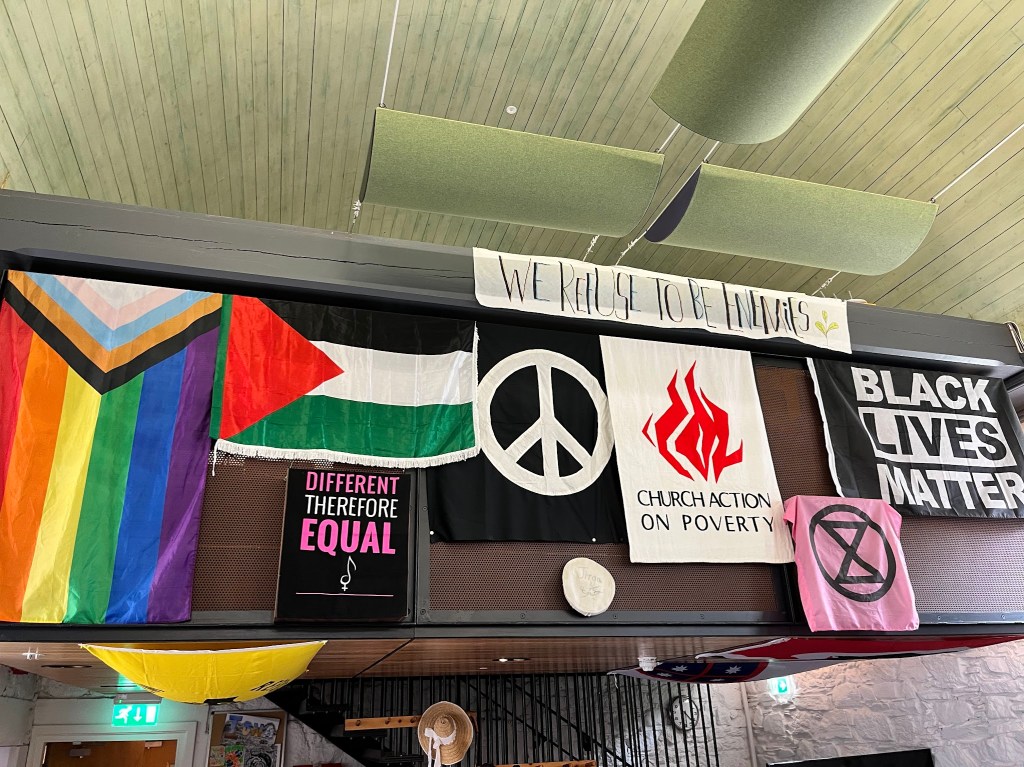
- Imbalance in representation. A large Palestinian flag is displayed in the dining hall, but there is no corresponding Israeli flag or acknowledgment of the Jewish connection to the land. The Iona Community itself has stated that the flags hanging in the dining hall represent the issues the Community cares about. Are we to infer, then, that the absence of any symbol representing the Jewish people or Israel means these concerns are not part of that care?
- Rejection of the IHRA definition. The Community has formally rejected the International Holocaust Remembrance Alliance Working Definition of Antisemitism. This definition — widely adopted by democratic governments and institutions — provides a clear framework for identifying antisemitism. Rejecting it raises understandable concerns about the Community’s willingness to address antisemitism seriously.
- Language in worship and public statements. Prayers routinely reference “de-occupation of Palestine.” Many Jewish people and allies hear this not as a call for coexistence but as a denial of Israel’s right to exist — especially when the historical Jewish presence in Judea is omitted from these narratives.
Why This Matters
These patterns have real impact. Symbols, language, and political alignments shape the spiritual and moral climate of a place. When they echo narratives that delegitimize Jewish self-determination, they contribute to an environment that many Jews experience as antisemitic.
For those who care about the sacred heritage of the Isle of Iona, it is essential to name and address these harms. The Iona Community can choose to acknowledge its actions, repent of the harm caused, and take concrete steps toward genuine peacebuilding — or it must face serious questions about its continued role on this island.
 Iona must repent